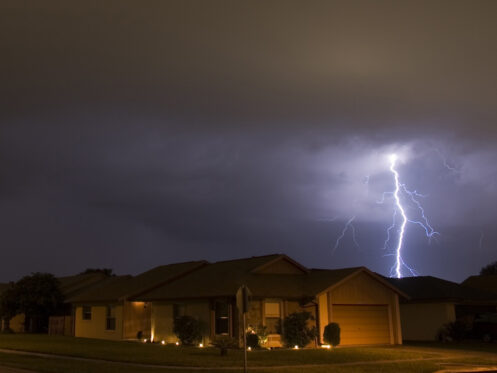
Florida experiences more lightning strikes than any other state, making power surges a common concern for homeowners. These sudden voltage spikes can damage sensitive electronics and major appliances, including your air conditioning system. Before storm season arrives, it’s important to determine whether your home has adequate surge protection to safeguard your cooling system.
Why Florida AC Units Are at High Risk in Storm Season
Homeowners in Florida face a heightened risk of power surges because the state experiences some of the highest lightning activity throughout the entire country. Frequent afternoon thunderstorms in the summer can cause sudden voltage spikes that travel throughout your residential electrical system. Even if lightning doesn’t directly strike your home, nearby strikes can cause damage.
Additionally, utility grid maintenance and traffic accidents cause electrical outages. When the power comes back on, it can cause a surge in the voltage entering your home. These sudden voltage fluctuations can affect appliances, sensitive electronics, and even HVAC equipment.
You rely on your air conditioning to keep your family comfortable throughout Florida’s long cooling season. Installing an HVAC surge protector can help shield sensitive components from everyday power surges. It is also one of the most effective forms of lightning protection for your cooling system.
What a Power Surge Does to Your AC’s Components
Power surges are well known to cause damage to home air conditioning systems. Your system’s compressor is one of its most expensive components. It’s also one of the first to suffer electrical damage from sudden voltage spikes. Surges can destroy your capacitors, which are responsible for starting and running your air conditioning system. They can also damage sensitive control boards that manage your entire system’s operation.
Repairs involving damaged circuit boards, capacitors, or other electrical components can be expensive. This is especially true for older systems where replacement parts are difficult to find. In some cases, the cost of repairing surge-related damage may make replacing the entire unit a more practical option. Investing in an AC surge protector is well worth it, as it can help prevent costly damage and prevent the need to purchase a new system prematurely.
Whole-Home vs. Unit-Level Surge Protection
There are a few different types of surge protection that you can purchase for your home. The most popular are whole-home and unit-level surge protection. A whole-home surge protector is specifically designed to protect your entire electrical system. It gets installed at your electrical panel box and intercepts large surges before they travel throughout your home’s electrical system. This protects your wiring, appliances, and everything plugged into your system.
Unit-level surge protectors get installed directly at specific equipment. For example, you may have them installed for your HVAC system and appliances like refrigerators and dishwashers. Combining whole-home surge protection with a dedicated HVAC surge protector provides more comprehensive protection for your air conditioner.
Do You Really Need One? Cost vs. Compressor Replacement
Many area homeowners wonder if an AC surge protector is worth it for their home. When making this decision, compare the cost of purchasing a surge protection device to that of replacing a major AC component. For most, it becomes clear that a surge protector is a cost-effective investment.
Lightning, Grid Flickers & Post-Outage Surges Explained
Most Florida homeowners face power surges from three different sources. These include lightning strikes, utility grid fluctuations, and post-outage power restoration events. Lightning is one of the most obvious threats, as a nearby strike can send a powerful voltage surge through your lines. These surges can damage sensitive electronics, including your HVAC equipment, within seconds.
Anytime you experience grid flickers, your utility company is performing maintenance, responding to changing power demands, or switching power loads. All of these cause brief voltage fluctuations that can damage your home’s electrical system and equipment. Even small power surges over time can gradually wear down electrical components and shorten their lifespan.
Power restoration after an outage event sends a surge of electricity through your system. This sudden surge in power can place significant stress on your AC equipment and appliances. Because Florida experiences frequent outages and thunderstorms, you should strongly consider installing a surge protector for your AC unit.
How a Surge Protector Is Installed on Your HVAC System
Getting a surge protector for your AC unit is a relatively straightforward process when performed by a qualified technician. Surge protection devices are mounted either at your outdoor air conditioning unit or at your electrical panel, depending on the type you get. The surge protection device will monitor the voltage coming into your system. Anytime it exceeds the set threshold, it will automatically divert excess energy to your home’s grounding system.
During installation, our technician will verify that the lightning protector for your AC unit is appropriately sized and will ensure that all electrical connections meet local code requirements. Having a professional handle the installation will ensure ongoing protection for the most sensitive components of your AC unit, such as its capacitor, compressor, and control boards.
Call Graham Heating & Air Conditioning for AC Recommendations
With Florida’s power grid surges and long storm season, getting lightning protection for your AC unit is essential. No homeowner wants to be stuck paying for a new air conditioning system or major repairs. Surge protection is one of the simplest investments you can make to protect your home appliances and HVAC system.
Contact Graham Heating & Air Conditioning for guidance on surge protection or to schedule HVAC services for your Tampa, FL home.
Frequently Asked Questions
Whether it’s about lightning protection for your AC or if AC surge protection is worth it, we receive many questions from homeowners. Our team is always ready to provide answers.
Yes, an HVAC surge protector is highly recommended for all residential air conditioning systems. Having a surge protector for your AC unit will protect it from unexpected voltage spikes. This prevents permanent damage, reducing the risk of costly repairs or even the need for replacement.
Yes, a power surge can easily damage your air conditioning system. Electrical spikes can affect capacitors, circuit boards, compressors, and other sensitive components. In severe cases, a power surge could cause immediate system failure and require a whole-system replacement.
For most homeowners in Florida, an HVAC surge protector is a worthwhile investment. When compared to the potential cost of surge-related damage to major components, the protection it provides is often well justified. It adds an extra layer of protection to ensure your home stays comfortable during Florida’s storm season.