Because Florida experiences a hot, humid climate for much of the summer, indoor humidity levels are a constant challenge for most homeowners in the state, and especially for those living in coastal areas like Tampa. Even when your air conditioner is running constantly, excess moisture can leave your home feeling uncomfortable and sticky. High indoor humidity can also encourage mold growth and reduce your indoor air quality, making your AC system work much harder than necessary.
Fortunately, there are several different ways to enhance your indoor humidity control. From adjusting your thermostat settings to investing in a whole-home dehumidification system, our team at Graham Heating & Air Conditioning can help you choose the best solution. The best place to start is by understanding how your air conditioning system manages moisture. This can allow you to choose the right steps to improve your humidity control.
Why Florida Homes Stay Humid Even With the AC Running
Knowing how to reduce humidity in a house in Florida starts with understanding your outdoor environment. Florida’s outdoor air is extremely humid during the summer months, with moisture levels exceeding 70%. Every time you open a door or window, that humid air can seep inside your home. It can also sneak in through small air leaks around your doors and window frames.
While your air conditioning system is cooling your air, it’s also removing some of that excess humidity. Unfortunately, restricted airflow, dirty filters, low refrigerant, and an improperly sized unit can all reduce its ability to dehumidify your home. If your AC is not removing humidity effectively, you may need other indoor air quality solutions.
The Link Between AC Sizing & Humidity Control
One of the biggest myths about home cooling is that an oversized air conditioning system will keep your home cooler. In reality, an oversized AC unit doesn’t run through a full cooling cycle the way a properly sized unit does. When your unit short-cycles, it doesn’t run long enough to adequately remove humidity from the air.
Unfortunately, it won’t take long until you notice your AC is not removing humidity. Having high humidity in the house with your AC running points to an oversized unit that isn’t doing its job. Furthermore, an oversized unit leads to a slew of other issues, including higher upfront costs, excessive system wear and tear, and a shorter lifespan.
Thermostat & Fan Settings That Help (or Hurt) Humidity
Another big misconception is that you should set your thermostat blower fan to On. If your blower fan is set to On, it will run regardless of whether your air conditioner is running. This creates a big problem when it comes to reintroducing moisture into your air.
When your air conditioning system runs, it naturally extracts moisture from the air. This moisture accumulates on your evaporator coil and in your drain pan. If your air conditioner shuts off and your blower fan continues to run, it will cause that water to evaporate back into the air. Essentially, you’ll be reintroducing humidity back into your air that your AC unit just removed.
Instead of dealing with this reintroduction of humidity, set your blower fan to Auto. This ensures it only runs when your air conditioning system runs.
Signs Your AC Isn’t Removing Enough Moisture
If you notice any of the following signs, your home’s humidity level may be too high:
- A persistent musty or damp odor
- A sticky or clammy feeling indoors
- Condensation forming on windows or glass surfaces
- Visible mold or mildew growth
Reducing humidity in a house in Florida starts with controlling excess moisture. The best AC humidity setting in Florida is between 45% and 55%. If your home is not within this range, it’s important to schedule a professional assessment to identify the cause and restore proper humidity levels.
Dehumidifiers, Ventilation & Whole-Home Solutions
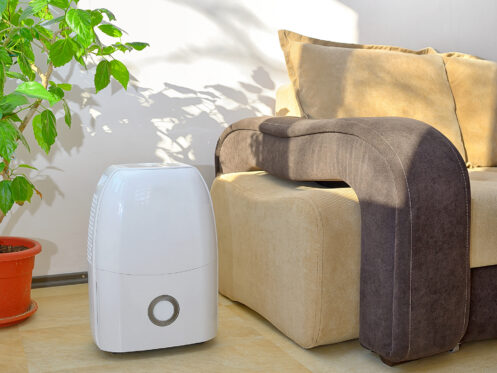
When wondering how to reduce humidity in a house in Florida, the best solutions are often dehumidifiers and improved ventilation. Instead of using portable dehumidifiers for individual spaces, it’s best to go with a whole-home dehumidification system. This helps control the humidity throughout your entire home instead of in just one room.
AC Maintenance That Improves Moisture Removal
Routine AC maintenance is the best way to ensure optimal efficiency from your home cooling system. Our professional maintenance includes cleaning coils, clearing the condensate drain, and so much more. As a homeowner, you need to keep up with routine filter changes. At Graham Heating & Air Conditioning, we offer our Maintenance Club to ensure your system always gets the care it needs.
Achieve the Ideal Indoor Humidity for Your Florida Home
The best AC humidity setting in Florida, ranging from 45% to 55% relative humidity, keeps humidity low enough that it doesn’t promote mold growth or make your home feel sticky and uncomfortable. From whole-home dehumidification systems to routine HVAC maintenance, we have exceptional services that can improve your indoor comfort.
Contact Graham Heating & Air Conditioning today to get assistance with your indoor humidity in Tampa or the surrounding areas.
Frequently Asked Questions
Whether asking about the best AC humidity setting in Florida or why an AC isn’t removing humidity, we get a lot of questions. Below, we’ll answer some of the most frequent questions we’ve received.